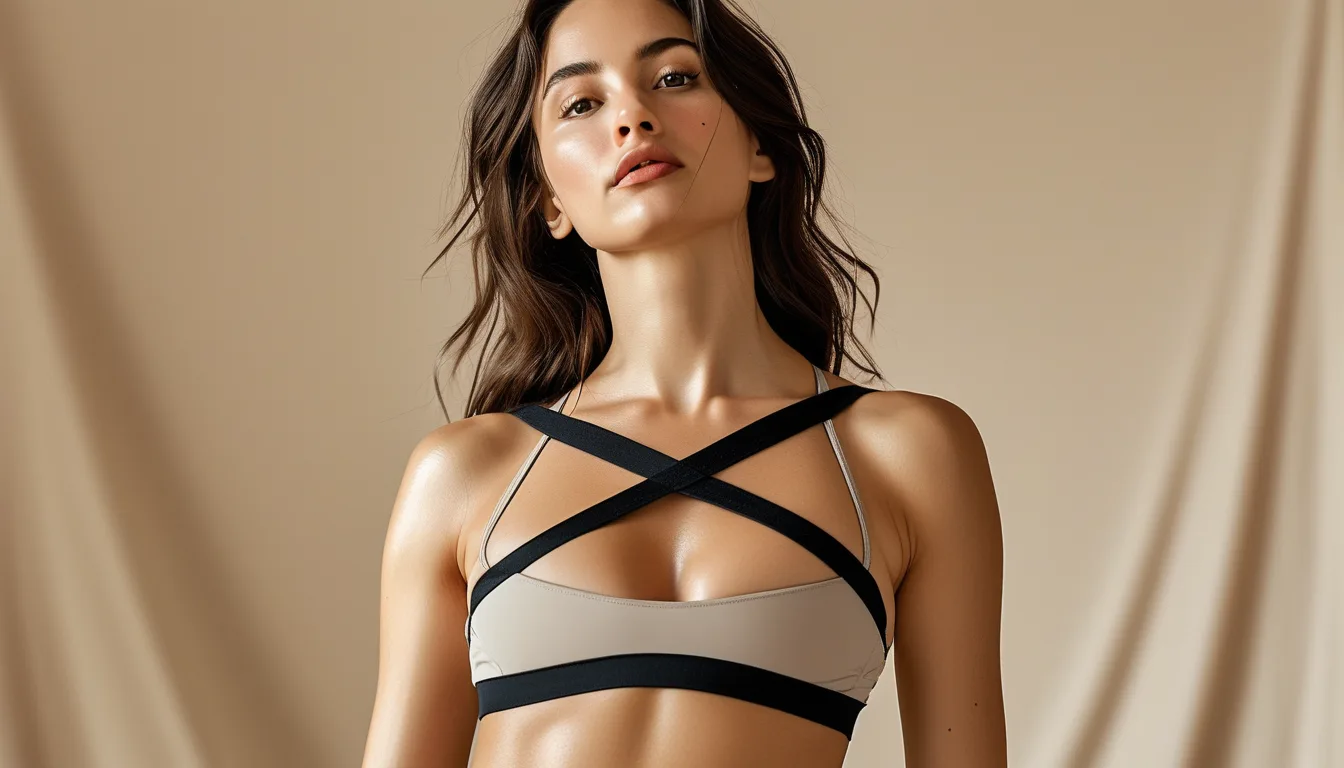
Why Crossover Waistbands Roll at the Back and Not the Front
Quick Answer: Crossover waistbands roll at the back because the crossover panel puts two layers of fabric at the front and only one at the back, so the back edge has less structure to resist folding - and it sits across the lumbar curve, where your body changes shape most when you hinge. Sizing up almost always makes it worse, not better. The three things that actually help are choosing a style with a wider back panel, checking the rise measurement at the back specifically rather than the front, and buying fabric with higher recovery rather than higher stretch.
The front is the reason you bought them. That clean asymmetric V across the hips does something no straight waistband does, and standing in front of the mirror it looks exactly right.
Then you deadlift, or sit down at a desk, or walk up two flights of stairs, and the back edge has quietly folded itself into a rope somewhere below your waist.
The front is still perfect. It is always still perfect. That asymmetry is the clue, and it points at something structural rather than something you did wrong when you picked a size.
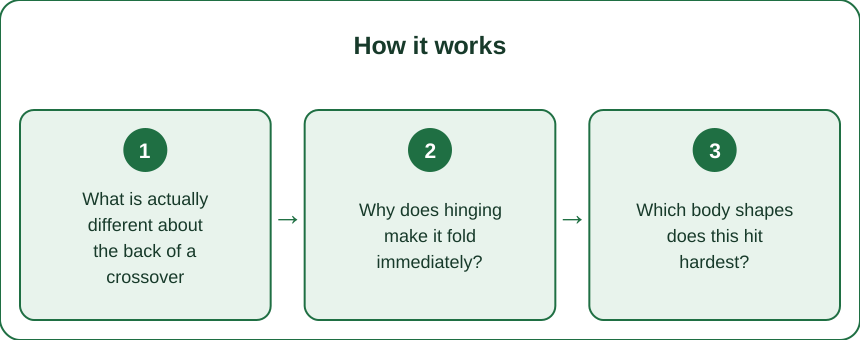
What is actually different about the back of a crossover waistband?
Layers. That is most of the answer, and it is easy to see once you go looking.
A crossover waistband is built from two overlapping panels that cross at the front. Where they overlap - across the lower abdomen and hips - you have two layers of fabric plus a seam, which is a genuinely rigid structure. It resists folding almost completely, which is why the front never rolls.
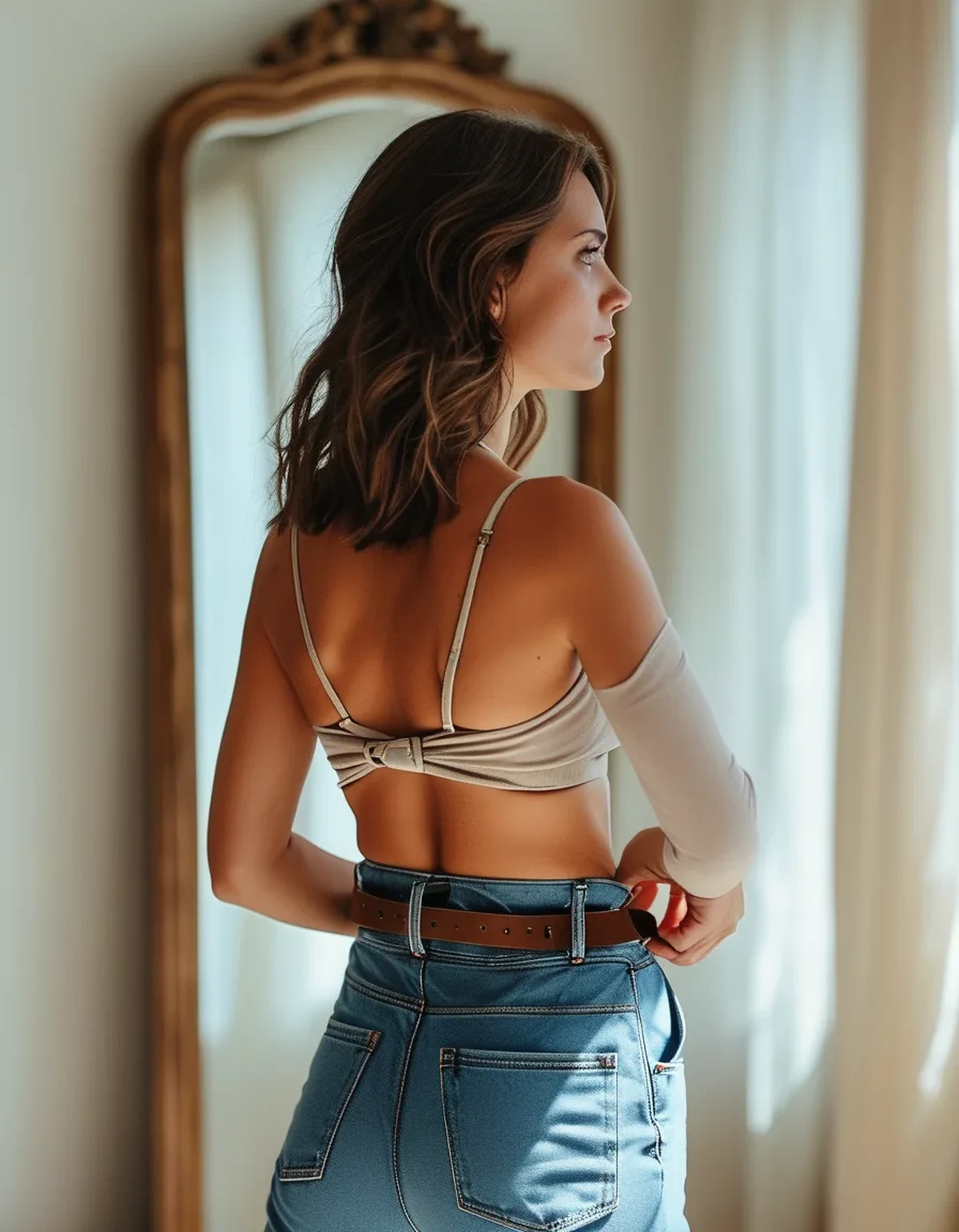
Travel around to the back and those two panels have separated into a single layer, often with no seam and frequently cut narrower than the front. It is the least structured part of the entire garment, and it has been placed on the part of your torso that moves most.
A few construction details make it better or worse:
- Back panel width. Some crossover styles taper dramatically toward the back seam. A narrow back band has almost no leverage against a rolling force.
- Whether there is an elastic or a bonded edge. Many crossovers deliberately omit elastic at the top to keep the front V soft and flat. That aesthetic choice costs you every bit of roll resistance at the back.
- Grainline. The crossover panels are frequently cut on a slight bias to make the V lie smoothly. Bias-cut fabric drapes beautifully and holds its shape poorly - lovely at the front, unhelpful at the back.
So the garment is not defective. It is optimised for the front, and the back is where the bill comes due.
Why does hinging make it fold immediately?
Because the back waistband crosses your lumbar curve, and that curve changes length dramatically when you bend.
Stand upright and the distance from your waist to your hip at the back is one length. Hinge into a deadlift, sit down, or bend to pick something up, and the skin and soft tissue over your lower back lengthens - noticeably more than the front of your torso shortens. The waistband is now being asked to cover a longer surface than it was cut for.
Fabric has two ways to deal with that. Stretch, or move. A wide, well-structured band with good recovery stretches and springs back. A narrow single-layer band takes the easier option and slides upward, which bunches the top edge - and once the top edge has a fold in it, that fold becomes a hinge that makes the next roll easier.
That progressive quality is the tell. It never rolls once and stops. It rolls a little, then more, then it is a rope, because each fold weakens resistance to the next.
This is why the classic advice does not work here:
- Sizing up gives the band more fabric to fold and less tension holding it flat. It reliably makes rolling worse.
- Sizing down increases tension but also increases the pressure that drives the band to migrate, and it flattens the front V into something tight and unattractive - so you lose the reason you bought them.
- Pulling it up higher just moves the fold up. The band still has the same structure.
The fix has to come from the garment, not the fit adjustment.
Which body shapes does this hit hardest?
This is not universal, and knowing whether you are in the high-risk group saves a lot of returns.
A pronounced lumbar curve is the main factor. The more anterior pelvic tilt you carry - which is extremely common, and not a problem to fix - the more the back waistband has to span a curve rather than a flat plane, and curves push bands off them.
A high waist-to-hip differential is the second. If your hips measure substantially more than your waist, the waistband is sitting above the widest part of the garment. Gravity plus the taper means the band is constantly being pulled downward at the back, and every step feeds that.
A short torso compounds both. Less vertical distance between ribs and hips means the band has less room to sit in, and any upward migration immediately runs into your ribcage and folds.
And conversely: if you have a relatively flat lower back and a smaller waist-hip differential, crossover waistbands may genuinely never roll on you, which is why online reviews on this are so wildly contradictory. The same garment behaves completely differently on two body shapes, and both reviewers are telling the truth.
5 Mistakes Everyone Makes With Crossover Waistbands
1. Sizing up because it rolled. The single most common response and the one that guarantees the problem gets worse. More fabric, less tension, more folding. If anything, the answer is a different cut at the same size.
2. Judging fit standing still in front of a mirror. Every crossover waistband looks good standing upright. The test is a bodyweight hinge, a deep squat, and thirty seconds of sitting down. If you cannot do that in the changing room, do it at home before removing tags.
3. Only checking the front rise on a size chart. Brands almost always list the front rise, because that is the flattering measurement on a crossover. The back rise is the number that predicts rolling - and if it is not listed, that omission is itself informative.
4. Confusing stretch with recovery. A fabric that stretches a long way is not the same as one that returns. Recovery is what pulls a stretched band back to flat after you stand up. High-elastane blends with a stated recovery claim outperform ‘buttery’ four-way stretch fabrics here almost every time, and the softest ones are frequently the worst.
5. Washing them warm and tumble drying them. Heat degrades elastane faster than anything else you do. A crossover that did not roll in month one and does in month four has usually not changed shape - the elastic has lost recovery. Cold wash, hang dry, and this problem arrives a year later instead.
What actually stops it?
In order of how much difference each makes:
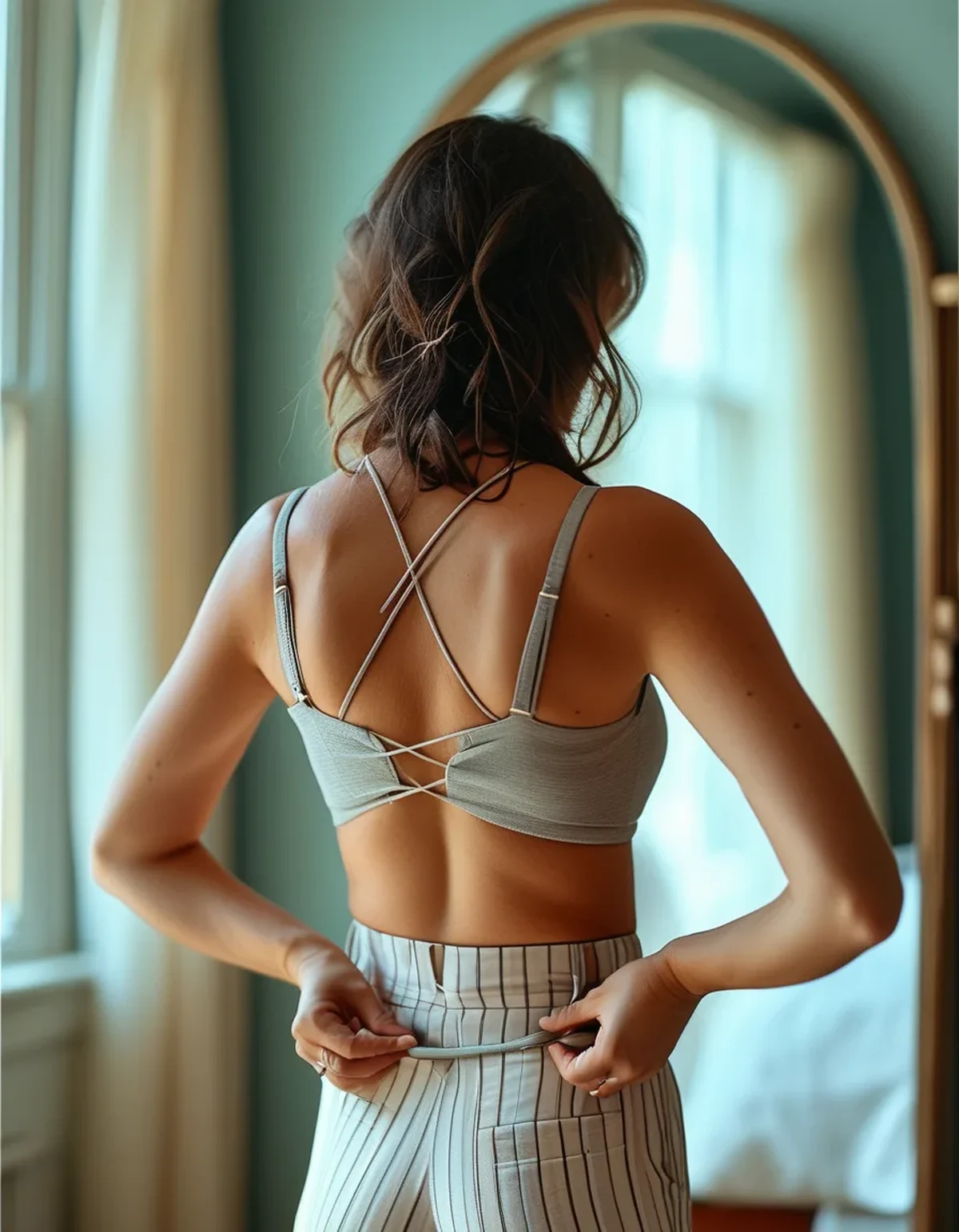
Buy a wider back panel. This is the biggest single lever. Look at product photos from behind - if the back band is visibly the same depth as the front crossover, you are in good shape. If it tapers to a narrow strip, expect rolling regardless of size or price.
Look for a bonded or elasticated back edge. Some brands run a thin elastic through the back band only, preserving the soft front V while adding structure exactly where it is needed. It is a small detail and it is close to a complete fix.
Check the back rise number. Anything under about 10 inches on a crossover style struggles on a curved lower back. If a brand publishes both front and back rise, that is a good sign about how much thought went into the pattern.
Prioritise recovery over softness. Ask what the fabric does after stretching, not how it feels in hand. Nylon-elastane blends generally hold structure better than polyester-elastane in this specific application.
Try a seamed back panel. A horizontal or curved seam across the back waistband adds enormous roll resistance for essentially no comfort cost, and it is a hallmark of a well-drafted crossover.
And in the meantime: wearing a slightly longer top that sits over the back band removes the visual problem entirely while you work out which style suits you. Not a fix. But it is the difference between finishing the session and thinking about your waistband for forty minutes.
FAQ: Crossover Waistband Questions, Answered
Does a higher rise stop a crossover from rolling?
A higher back rise helps considerably; a higher front rise does almost nothing, and it can hurt by making the crossover panel tall enough to fold at the top of the V. Since most brands only publish the front number, this is a case where a tape measure on a pair you already own is more useful than any size chart.
Are more expensive crossover leggings less likely to roll?
Not reliably. Price mostly buys fabric hand-feel and finishing, and some of the softest, most expensive crossovers use deliberately unstructured back bands because that is what makes them feel good. Construction predicts rolling far better than price does - a mid-priced pair with a wide seamed back band will outperform a premium buttery one.
Will they stop rolling after a few washes?
No, and the trend runs the other way. Fabric recovery degrades over time, particularly with heat, so a waistband that rolls slightly when new will roll more at six months. If a new pair rolls in the changing room, that is the best it will ever behave.
If you experience numbness, tingling or pain from waistband pressure, that is worth a conversation with a healthcare professional rather than a styling fix.
TL;DR:
- The front has two fabric layers and a seam; the back has one layer and often a narrower panel. That asymmetry is the whole problem.
- The back band also sits across your lumbar curve, which lengthens when you hinge - so it migrates and folds.
- Sizing up makes it worse. More fabric means more folding, not less.
- What works: a wider back panel, an elasticated or seamed back edge, a back rise of 10 inches or more, and fabric chosen for recovery over softness.
- Cold wash and hang dry. Heat kills recovery, and lost recovery is why a good pair starts rolling in month four.
Crossover waistbands are a design that trades structure for a very specific look. Knowing where it made that trade means you can buy the versions that only gave up a little of it.
See It in Motion
Seen here: High Waist Embossed Yoga Leggings with Side Pockets — shop it on bubblelime.com
Keep Reading
This article is for general informational and styling purposes only. Fit, sizing, and product availability may vary.