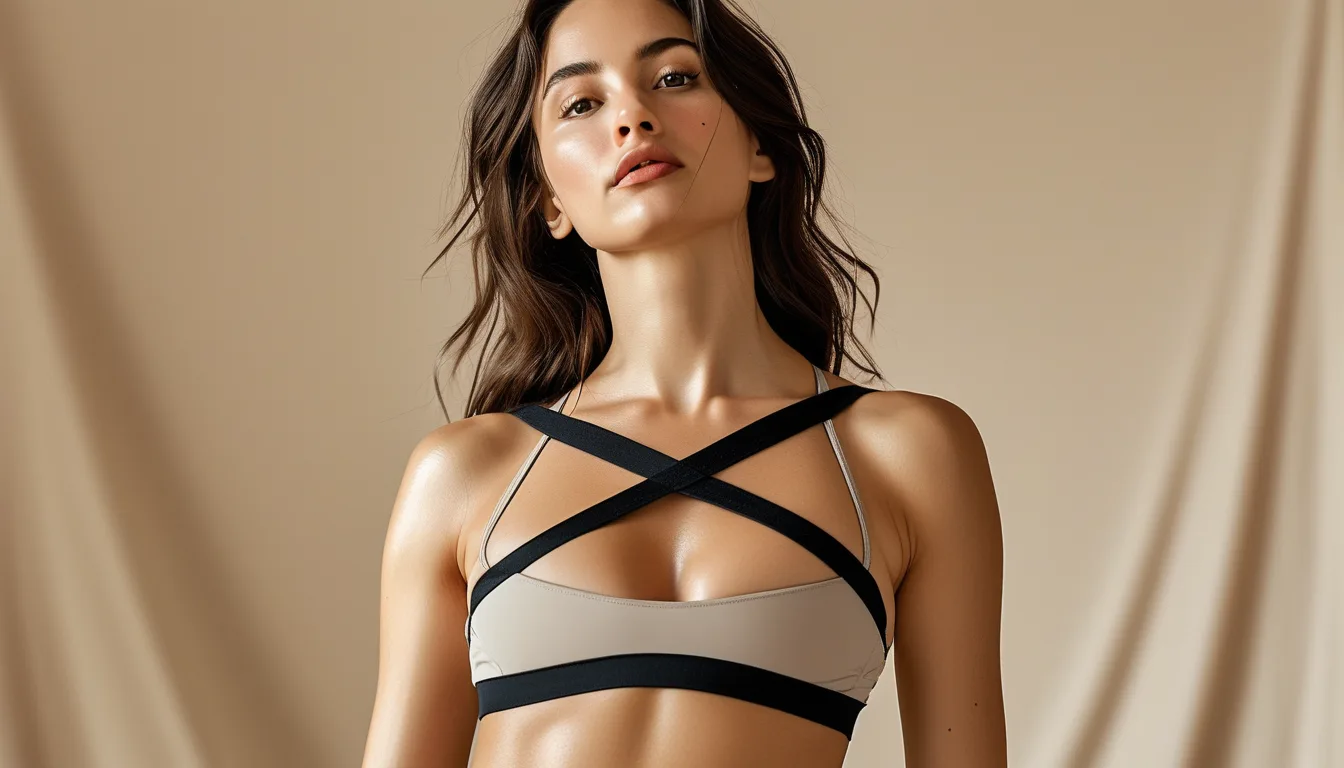
The Crossover Waistband in the Season Shift: What Changes When You Add Layers
Quick Answer: The waistband did not change - your layering did. A longer top adds fabric that pushes down on the V, a jacket hem sits exactly at the crossover point, and cooler weather means you are wearing the leggings for longer stretches without moving. Fix it by choosing tops that end above or well below the crossover point (never exactly at it), sizing layers so nothing compresses the V, and going back to a straight high-rise when you will be sitting for hours.
Every fall the same complaint surfaces: leggings that were flawless in July suddenly roll, dig, or bunch in October. Nothing about the garment changed. Everything about what you put on top of it did.

Why does a crossover waistband behave differently under layers?
The crossover design works because the two overlapping panels distribute tension diagonally rather than in a single horizontal band. That is what makes it comfortable across a soft stomach and what stops the classic muffin-top line.
That diagonal structure also means it depends on being left alone. A straight high-rise band resists downward pressure evenly all the way around. A crossover band has a specific point - the V - where two layers meet and where the tension is lowest.
Add a heavy top that ends right at that V, and the fabric weight lands on the weakest point. Add a jacket with a structured hem, and it presses the top panel down and out. Add a bag strap across the hip, and one side of the V shifts while the other stays put.
Summer outfits were mostly cropped tops and nothing else. The waistband was fully exposed and unloaded. Autumn outfits are three layers deep, and two of them typically end somewhere in the danger zone between the navel and the hip.
Once you see it as a load problem rather than a fit problem, the solutions get obvious.
Which top lengths actually work over a crossover waistband?
The rule is simple: never end a top at the crossover point.
Works well:
- Cropped or fitted tops ending above the V. The band stays fully visible and unloaded. This is the design’s best case.
- Long tops ending at mid-hip or lower, so the weight passes over the band rather than resting on it. Tunic-length sweaters, longer knits, and anything that reaches the top of the thigh.
- Fully open layers - unbuttoned shirts, open cardigans, unzipped jackets - because the weight hangs from the shoulders and falls to either side of the V.
Causes problems:
- Anything ending within about two inches of the crossover point. This is the single most common cause of the fall bunching complaint.
- Fitted knits with a heavy ribbed hem that grips the band and drags it down as you move.
- Jackets with a drawcord at the hem, which cinch exactly where the V sits and create a horizontal compression line across a diagonal structure.
A quick test in the fitting room: put the outfit on and sit down for a full minute, then stand and walk five steps without adjusting. If you reach for the waistband, that top length is wrong for that legging.

What Nobody Tells You About Fabric Weight in the Season Change
Here is the thing that catches people out. Summer crossover leggings and fall crossover leggings are often not the same fabric, even from the same brand in the same style name.
Warm-weather versions lean toward lighter, more open knits with higher elastane content for airflow. Cool-weather versions lean toward brushed interiors, heavier face weights, and often slightly less stretch because the brushing process changes the hand. A brushed-interior legging can weigh meaningfully more per square yard than its summer counterpart.
That extra weight has to be held up by the same waistband. On a heavier fabric, the crossover panels carry more downward load before you have put a single layer on top. It is why the identical size in the identical style can feel secure in June and slightly slippy in November.
The second thing nobody mentions: static. Dry indoor air plus a brushed synthetic interior plus a wool or acrylic top equals a top that clings to the waistband and rides with it. That is not a fit failure, that is electrostatics, and it resolves with a dryer sheet or a light mist of water on the inside of the top layer.
Third: your body is often slightly different in autumn - most people carry a little more mid-section volume as activity patterns shift. A band that sat comfortably at the natural waist in August may sit half an inch lower in November, which changes the whole geometry.
How do you stop the V from flattening out during the day?
The V flattening - where the crossover loses its shape and reads as a plain gathered band - is mostly a wear-and-care issue rather than a styling one.
During the day:
- Set the band deliberately when you put them on. Pull both panels into position rather than yanking the whole waistband up at once. Ten seconds of setup holds for hours.
- Avoid tucking anything into the crossover. Phones and keys held at the band pull the top panel out of alignment permanently within a few wears.
- If you wear a bag with a hip-height strap, alternate shoulders. A crossbody strap sitting on one side of the V for eight hours will absolutely leave that side looser.
In the wash:
- Cold water, gentle cycle. Heat is the primary killer of elastane recovery, and a stretched-out crossover almost always traces back to hot washing.
- Never the dryer, or if you must, no heat. This matters more for crossover styles than straight bands because the diagonal seams carry uneven tension when they shrink unevenly.
- Wash inside out, and skip fabric softener, which coats elastane fibers and reduces recovery over time.
- Let them rest a day between wears if you can. Elastane recovers with time out of tension.
When to accept it is done: if the band no longer returns to shape after a cold wash and a day flat, the elastane has fatigued. That is typically 12-18 months of regular rotation, and no styling adjustment brings it back.
FAQ: Crossover Waistband Layering Questions, Answered
Should I size up in a crossover waistband for fall?
Generally no. Sizing up usually makes the V slip more, because the design relies on gentle tension to hold its shape. If the issue is compression from layers, change the layers, not the legging size. If the issue is genuine mid-section change, size up in the legging and check the band separately.
Can I wear a belt with a crossover waistband?
A belt over the crossover defeats the design - it applies exactly the horizontal compression the diagonal structure was built to avoid, and it creates a visible ridge. If an outfit needs a belt, wear a straight high-rise that day.
Why does one side of the V sit lower than the other?
Most commonly a bag strap, a consistent sleeping position, or simple asymmetry in how you pull them on. Try setting the band while looking in a mirror for a week. If it persists in a brand new pair straight from the package, that is a manufacturing issue worth returning.
Is the crossover style bad for long sitting?
Not bad, but not its strength. The V sits right where the torso folds, so on a long flight or a full desk day, a straight high-rise or a seamless band is usually more comfortable. Save the crossover for days with more movement in them.
TL;DR:
- The problem is layering load, not the waistband. Never end a top within two inches of the crossover point.
- Fall fabrics are heavier and brushed, which adds downward weight before any layers go on.
- Set the band deliberately, avoid hip-height bag straps on one side, and skip belts entirely.
- Cold wash, no dryer, no softener - heat is what actually kills the V.
The crossover waistband is one of the genuinely good design innovations in activewear, and it survives autumn fine once you stop asking it to hold up a sweater hem. Adjust the layers above it and it goes right back to being the pair you reach for first.
See It in Motion
Seen here: High Waist Yoga Leggings with Side Pockets — shop it on bubblelime.com
Keep Reading
This article is for general informational and styling purposes only. Fit, sizing, and product availability may vary.