Crossover Waistband When You Are Between Two Sizes
Quick Answer: A crossover waistband has two overlapping panels rather than one band, so it distributes tension differently across the hip and stomach. Between sizes, size up rather than down — the crossover’s angled construction means a small size digs at the overlap point without adding hold where you need it.
The crossover waistband is the one cut where the usual between-sizes instinct is actively wrong.
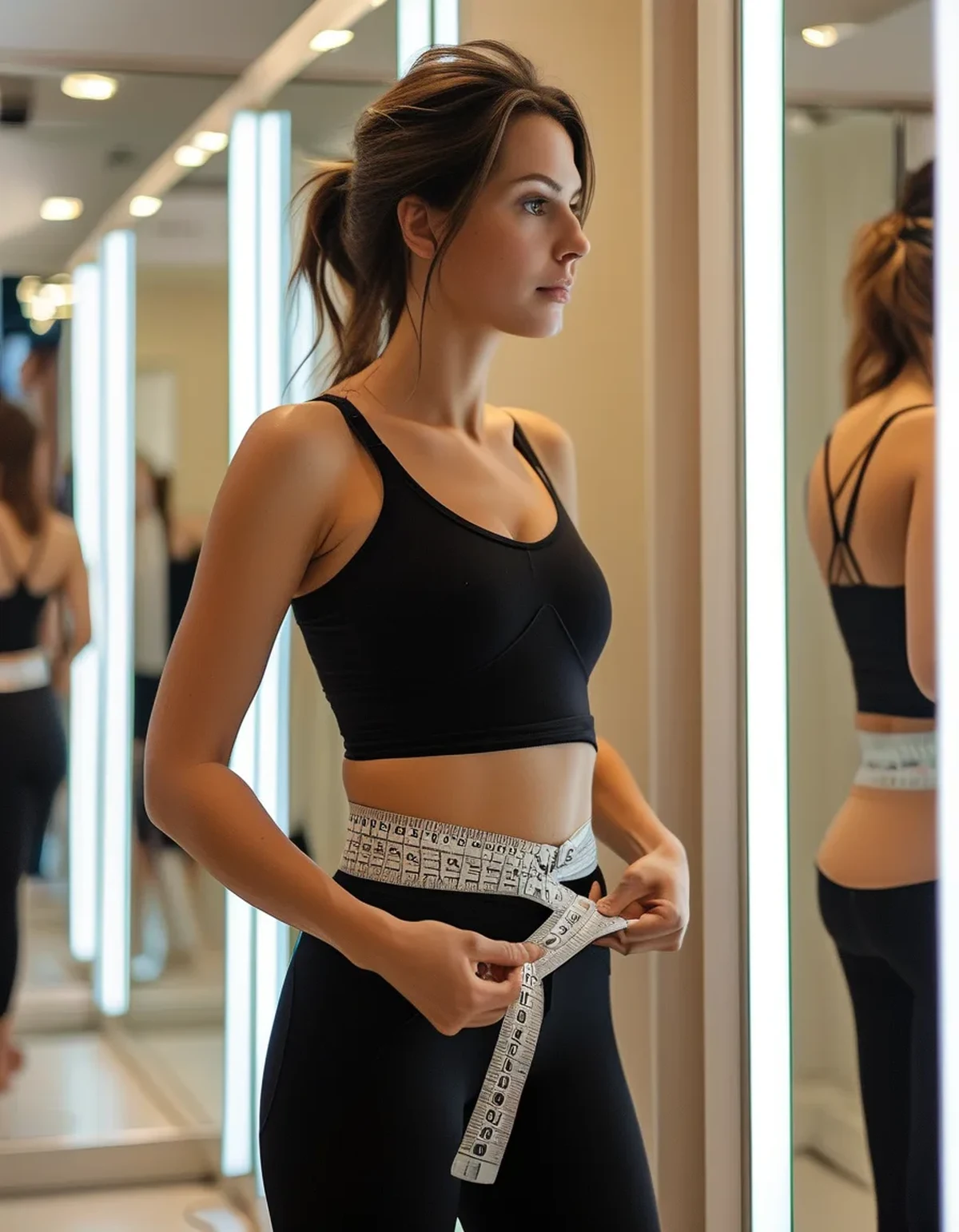
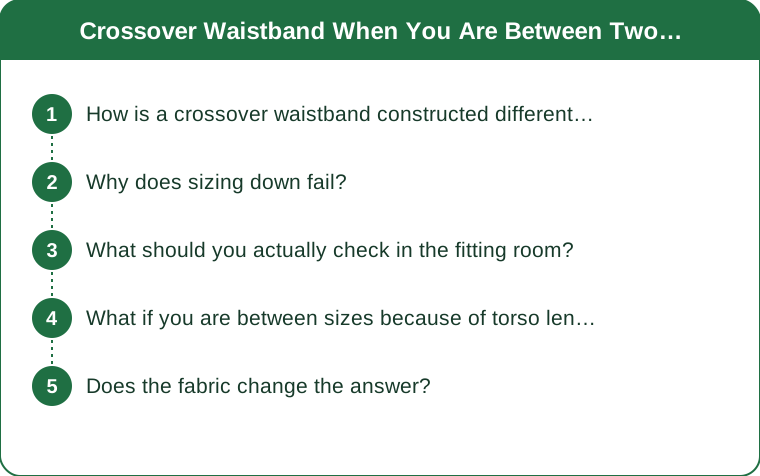
How is a crossover waistband constructed differently?
A standard high-rise legging has a single band of fabric, usually with the same tension all the way around, often with an elastic or a doubled layer.
A crossover has two panels that overlap on an angle, typically crossing at the front. That creates three distinct zones: a double-thickness area where the panels overlap, and two single-thickness areas at the outer edges.
The consequences are specific:
- Tension is not uniform. The overlap area is firmer and less stretchy; the outer edges are softer.
- The top edge is diagonal, not horizontal, so it sits at different heights around the body.
- The V-shape at the front is a design feature that only works when the panels sit flat rather than being pulled taut.
That last point is the whole sizing story. The crossover looks right when the fabric is relaxed enough to hold its shape. Pull it tight and the V distorts into a straight line.
Why does sizing down fail?
The instinct is reasonable — a smaller size means more compression means more hold. On a standard band, that logic mostly works. On a crossover, it fails in three ways.
The overlap becomes a pressure ridge. Double-thickness fabric under high tension creates a firm band across the stomach at exactly the point where the panels cross. That is the digging people describe, and it does not soften with wear.
The V flattens out. Stretched taut, the angled edges pull horizontal and you lose the design entirely. You have paid for a crossover and are wearing a badly fitting high rise.
Hold does not actually improve. Because the tension is uneven, a smaller size increases pressure at the overlap without increasing it where the waistband needs to grip — the back and the sides. Many people find a size-down crossover rolls more, not less.
Sizing up keeps the panels relaxed, preserves the shape, and distributes tension across the whole band. The trade is slightly less compression through the leg, which is usually the better problem to have.

What should you actually check in the fitting room?
Five checks, in order. The first three matter most:
-
Sit down and look at the front. The overlap should stay flat. If it bunches into a ridge or the top edge folds over on itself when seated, the size is too small. This is the single most predictive test and most people skip it.
-
Hinge forward at the hips. The back should stay up. If the waistband gaps at the back when you hinge, the issue is torso length or hip-to-waist ratio, not size.
-
Check the V in the mirror from the side. It should read as an angle. If it looks like a horizontal line, it is stretched too far.
-
Run a finger under the top edge at the sides. You want it snug with a little give, not compressed into the skin.
-
Walk and do one squat. Rolling usually shows up within four or five movements, not after an hour.
What if you are between sizes because of torso length, not waist?
This is common and frequently misdiagnosed as a sizing issue when it is a proportion issue.
Short torso: a crossover designed for an average torso sits high on you, and the overlap lands at the narrowest part of the waist or above it. That produces a band that feels like it is climbing toward the ribs. Look for a mid-rise crossover rather than a smaller size — the problem is height, not circumference.
Long torso: the crossover sits lower than intended, the V lands below the natural waist, and the waistband has less to grip. This is a genuine roll-down risk. A super-high-rise crossover, or a style with a wider band, addresses it.
Larger hip-to-waist difference: the waistband is sized for a proportion that does not match you, so it either gaps at the back or grips too hard at the hip. Some brands cut a curve into the band specifically for this; those are worth seeking out.
In all three cases, changing size makes one problem better and another worse. Changing rise or cut solves it.
Does the fabric change the answer?
Substantially, and it is the variable people account for least.
Buttery-soft, high-elastane fabrics are more forgiving between sizes and more prone to rolling. On these, sizing up is low-risk — the fabric recovers well and holds shape.
Firmer, compressive, lower-elastane fabrics are less forgiving in both directions. Sizing up on a firm fabric can genuinely lose hold. On these, if you are between sizes, check whether the brand offers a tall or curvy variant before defaulting to a size change.
Ribbed crossovers behave differently again — the rib stretches horizontally more readily, so they run more forgiving than they look, and sizing down is a more common error with rib.
Seasonal note: as you move into autumn layering, a crossover under a longer top loses most of its visual purpose, so the question becomes purely about comfort. That is a reasonable moment to prioritise the size that feels right over the one that looks sharpest bare.
TL;DR:
- A crossover uses two overlapping angled panels, so tension is uneven and the shape depends on the fabric staying relaxed.
- Between sizes, size up — sizing down creates a pressure ridge at the overlap without improving hold.
- Sit down and check the front overlap; that single test predicts most fit failures.
- If the problem is torso length or hip-to-waist ratio, change the rise or cut rather than the size.
The crossover waistband is one of the few cuts where the standard between-sizes advice reverses, which is why so many people conclude the style does not work for them after trying exactly one size in the wrong direction.
See It in Motion
Seen here: Super High Waist Embossed Yoga Leggings with Inner Pocket — shop it on bubblelime.com
Keep Reading
This article is for general informational and styling purposes only. Fit, sizing, and product availability may vary.