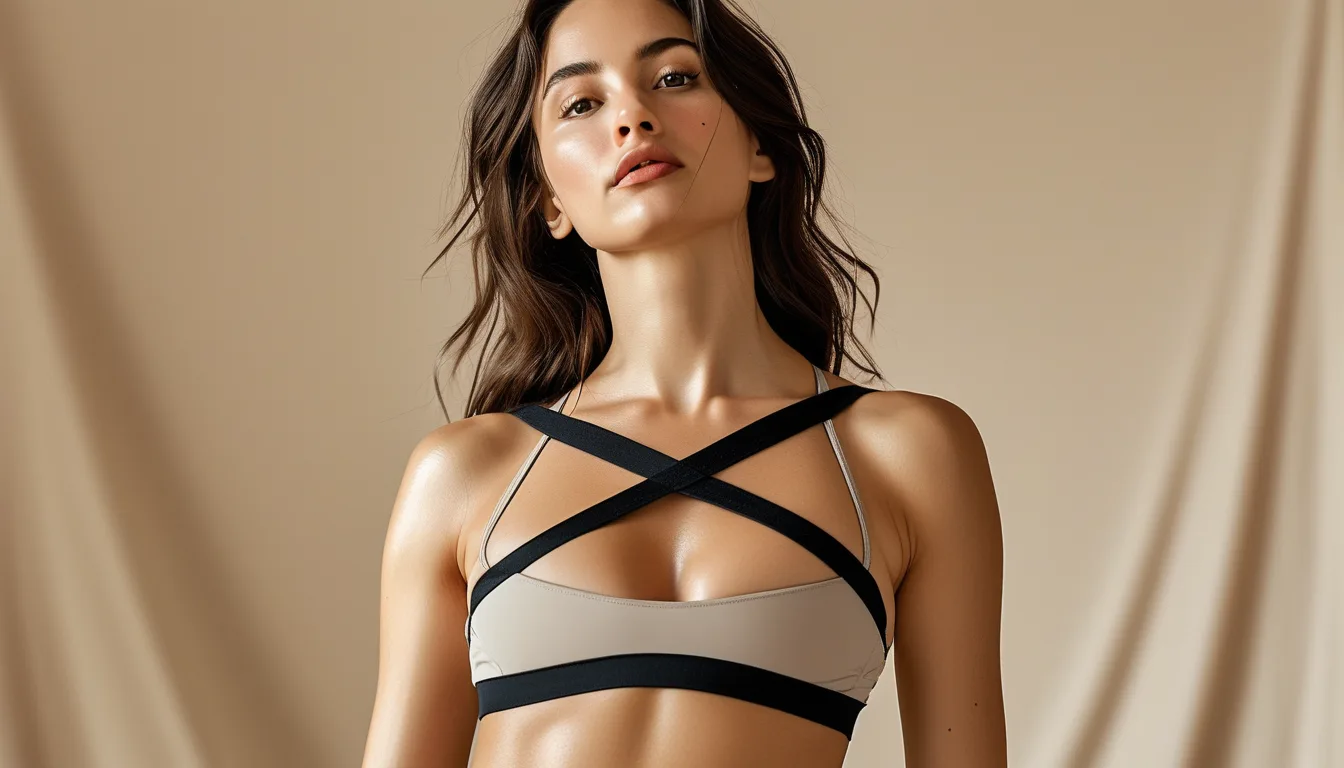
Crossover Waistband vs Regular High-Rise: What the X-Shape Actually Does
Quick Answer: A crossover waistband works differently from a standard high-rise band because its fabric panels run diagonally across your torso instead of straight around it, which distributes waistband tension across a wider path (reducing digging-in at any single point) and creates a visual X or V-shape that draws the eye inward, mimicking a cinched waist. It flatters torsos with a straighter waist-to-hip transition most, since the diagonal lines add the curve a straight band doesn’t create on its own.
You’ve noticed it in the mirror before you could explain why: leggings with that crossed, wrap-style waistband just look different on your torso than a plain high-rise pair — not just “cuter,” but like your waist is doing something it doesn’t do in the straight-banded version. That’s not your imagination, and it’s not just the pattern. It’s actual geometry.
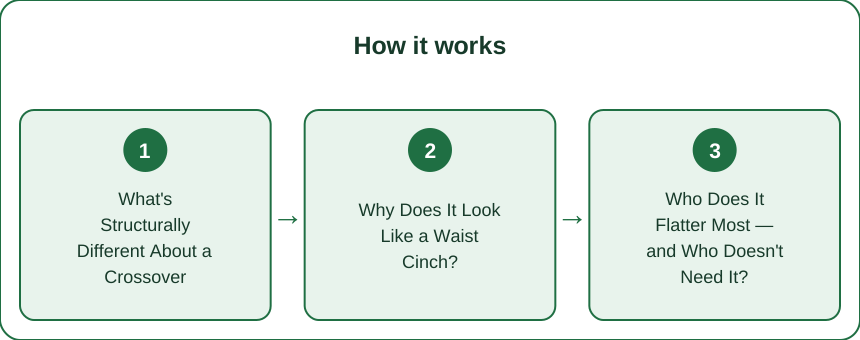
What’s Structurally Different About a Crossover Waistband?
A standard high-rise waistband is a single continuous band of fabric that wraps horizontally around your torso, usually a wide strip of the same width all the way around. Its tension is applied uniformly in a straight horizontal line — which means if that line falls at an uncomfortable spot on your torso (often right at the narrowest point of your natural waist or over your lower ribs), the pressure concentrates there with nothing to redirect it.
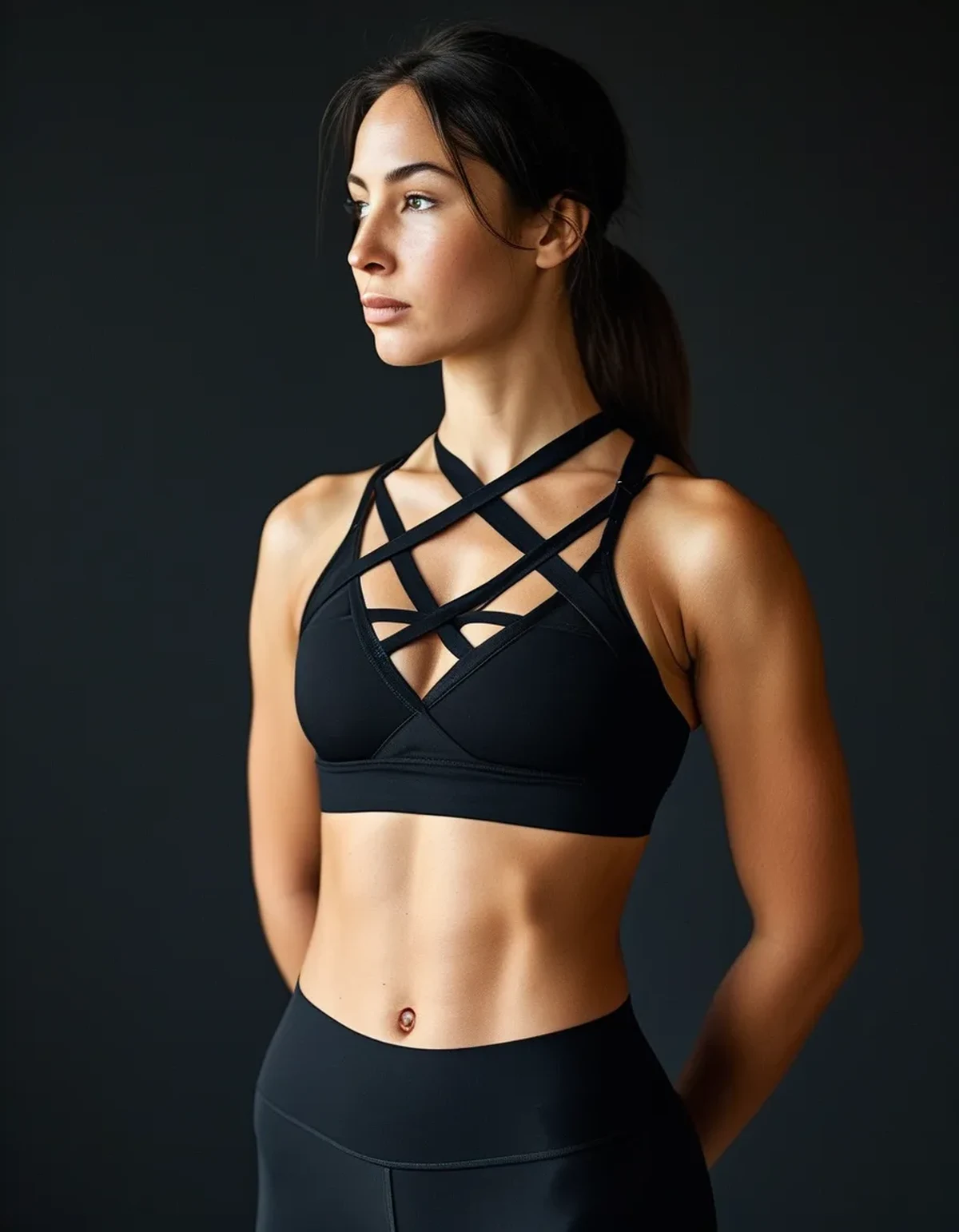
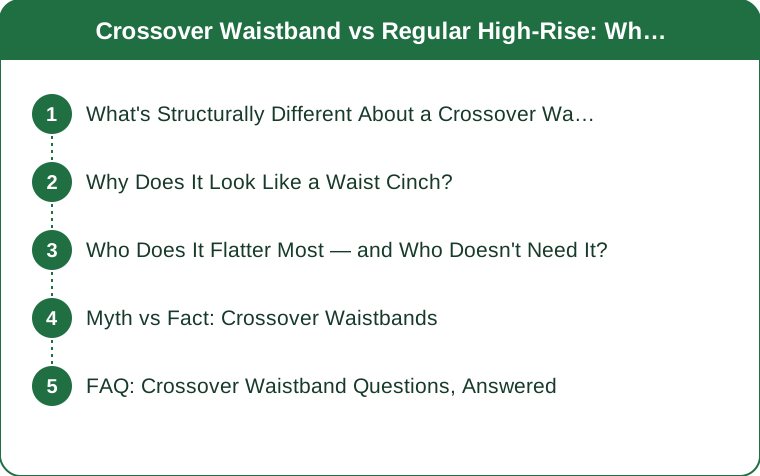
A crossover waistband replaces that single straight band with two panels that cross over each other diagonally, usually meeting in a V or X shape at your natural waistline before continuing down to the main garment. Structurally, this means the fabric tension runs at an angle across your torso instead of straight around it. Diagonal tension distributes force across more surface area and more directions than a single horizontal line does — similar to why a diagonal seatbelt strap feels less restrictive across your torso than a straight horizontal one would.
The practical result: less concentrated pressure at any single point, particularly at your lower ribs or the exact crease where your torso bends when you sit. Many women who find straight high-rise bands “roll down” or dig in after sitting report the crossover style holding position better, precisely because the diagonal panels don’t rely on uniform tension around a single horizontal line to stay put.
Why Does It Look Like a Waist Cinch?
This is a visual effect, and it works through a well-established styling principle: diagonal lines draw the eye differently than horizontal or vertical lines.
A straight horizontal waistband creates a horizontal line across your torso. Horizontal lines tend to visually widen whatever they cross — it’s the same reason a horizontal-striped shirt tends to read as broadening rather than lengthening.
A crossover band replaces that single horizontal line with two diagonal lines meeting at a point, usually right at or near your natural waist. Diagonal lines pointing inward toward a single meeting point create what’s called a convergence effect — the eye follows the lines to where they meet, and that meeting point reads visually as “the narrowest part.” Even if your actual waist measurement hasn’t changed at all, the crossing lines make that point look like the cinch of the silhouette, the same way a wrap dress uses diagonal fabric folds to create the illusion of a defined waist on any body shape.
This is why crossover styles are frequently marketed with “waist-defining” or “hourglass” language — it’s not fabric compression creating the shape (crossover bands aren’t typically more compressive than a standard band), it’s the line direction doing the visual work.
Who Does It Flatter Most — and Who Doesn’t Need It?
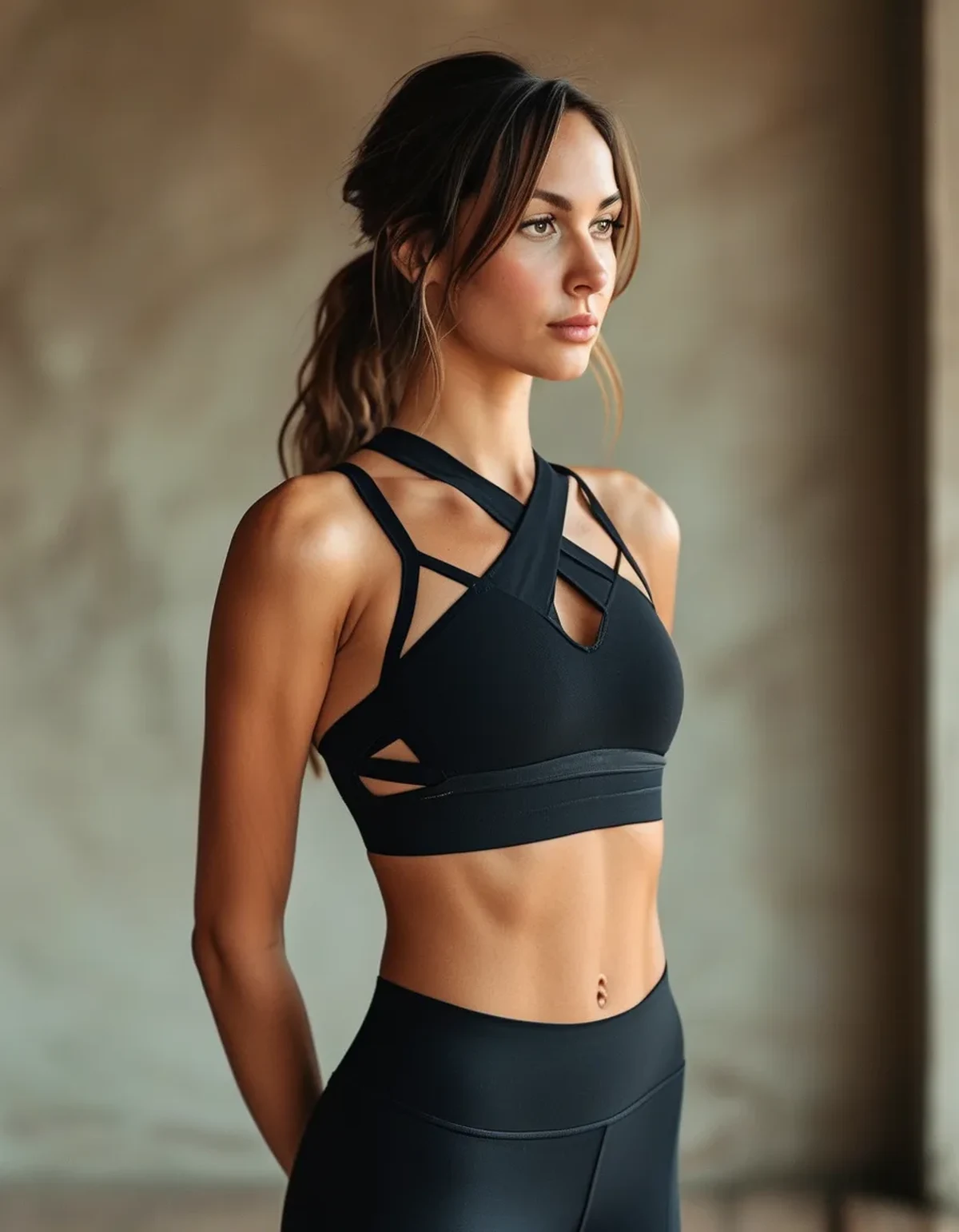
Straighter torso-to-hip proportions benefit most. If your natural waist-to-hip ratio is closer to 1:1 (less dramatic curve between waist and hip), the diagonal lines of a crossover band add a visual curve that a straight band simply doesn’t create. This is the classic case where the garment is doing shaping work your body isn’t doing on its own — not because anything is wrong with a straighter shape, but because the crossover band adds a design element that specifically targets that transition.
Torsos with a shorter distance between ribs and hip also tend to benefit, because the diagonal panels have less vertical distance to travel before meeting, which keeps the V or X point looking crisp rather than stretched out.
Who doesn’t need it as much: if you already have a pronounced waist-to-hip curve, a standard high-rise band already reads as fitted and shaped against that curve — the crossover’s visual cinch effect adds less because your body is already creating that same line naturally. That doesn’t mean it looks bad; it just means the styling benefit is smaller relative to what a straighter torso gains.
Comfort-wise, regardless of shape, anyone who has experienced digging-in or rolling from a straight high-rise band during sitting-heavy activities (car rides, desk-adjacent errands before or after a workout, seated stretches) may prefer the crossover’s distributed tension, independent of the visual effect entirely.
Myth vs Fact: Crossover Waistbands
Myth: Crossover waistbands provide more compression than regular high-rise. Fact: Compression level depends on the fabric and construction (single-layer vs double-layer, spandex percentage), not the crossover shape itself. A crossover band in a lightweight fabric can be less compressive than a standard band in a heavy compression fabric.
Myth: The crossover style works the same on every rise height. Fact: The diagonal convergence effect is strongest at true high-rise (typically 9”+ front rise), because there’s more vertical torso space for the diagonal lines to travel and create a visible point. On a low or mid-rise crossover, the effect is muted since the panels have less room to cross before reaching the main garment.
Myth: Crossover bands are less supportive for high-impact workouts. Fact: Support depends on construction quality and fabric, not the crossover shape. Well-constructed crossover waistbands can hold as securely during running or jumping as a standard band — the diagonal seams don’t inherently weaken hold, and in some cases the distributed tension helps them stay in place better during movement.
Myth: If a straight high-rise fits fine, a crossover offers nothing extra. Fact: Even with a comfortable fit, the crossover still changes the visual line of your torso. Fit comfort and visual effect are separate benefits — you can have a well-fitting straight band and still prefer the aesthetic the crossover creates.
FAQ: Crossover Waistband Questions, Answered
Does a crossover waistband dig in less than a regular high-rise?
For many people, yes — because tension is distributed diagonally across more surface area instead of concentrated in one horizontal line, particularly noticeable when sitting or bending forward.
Is crossover waistband style only for leggings?
No, though it’s most common there. The same diagonal-panel construction appears in some shorts, biker shorts, and even swimwear bottoms for the same visual and comfort reasons.
Will a crossover waistband show under a fitted top?
Some styles create a slight visible ridge where the panels overlap, similar to any waistband seam. Lower-profile crossover designs minimize this, so check reviews or product photos under fitted layers if that’s a concern.
Does the crossover shape fade or lose its V-shape after washing?
Quality depends on the elastic and seam construction inside the panels, not the crossover design itself. Look for reinforced stitching at the convergence point, since that’s the highest-stress area of the garment during wear and washing.
TL;DR:
- A crossover waistband uses diagonal fabric panels instead of one straight horizontal band, distributing tension across more surface area
- Diagonal lines create a visual convergence point at your natural waist, producing a cinched-waist illusion regardless of your actual measurements
- It flatters straighter waist-to-hip proportions most, since it adds a curve a standard band doesn’t create
- Comfort benefits (less digging-in when sitting) apply to most body shapes, separate from the visual styling effect
The X-shape isn’t just a design flourish — it’s redirecting fabric tension and eye movement at the same time.
See It in Motion
Seen here: Super High Waist Embossed Yoga Leggings with Inner Pocket — shop it on bubblelime.com
Keep Reading
This article is for general informational and styling purposes only. Fit, sizing, and product availability may vary.