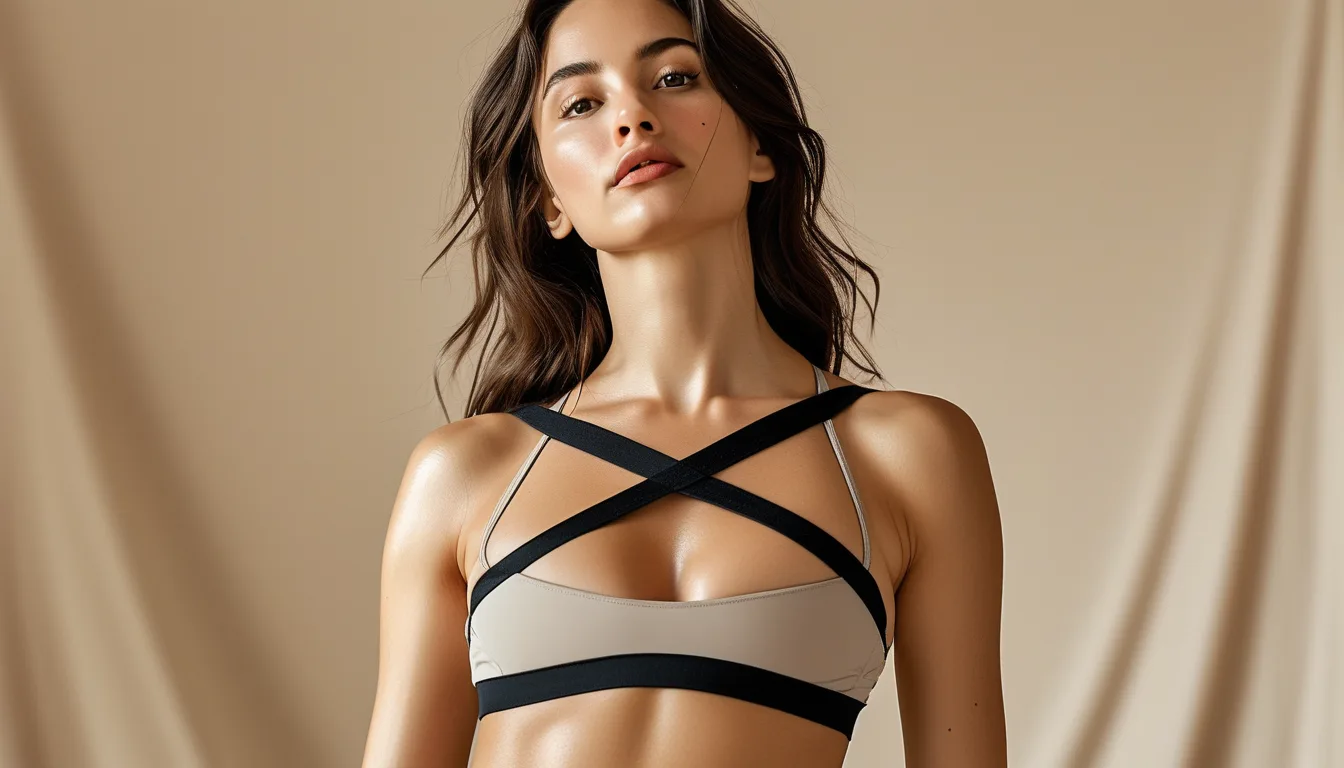
Crossover Waistbands: Which Activity Actually Breaks Them
Quick Answer: Crossover waistbands hold best in movements with a stable torso and slow, controlled loading - lifting, pilates, walking, most yoga. They fail fastest in repetitive vertical impact and continuous hip flexion, which means running, high-knee cardio, and long cycling. The reason is that the crossed panels resist downward pull unevenly, so repeated bouncing works one side down while the other holds, producing a twist rather than a clean slide.
You wear the same leggings to lift on Tuesday and they are perfect. You run in them on Thursday and spend three miles hitching one side up. Same garment, same body, entirely different result - and it is not random.
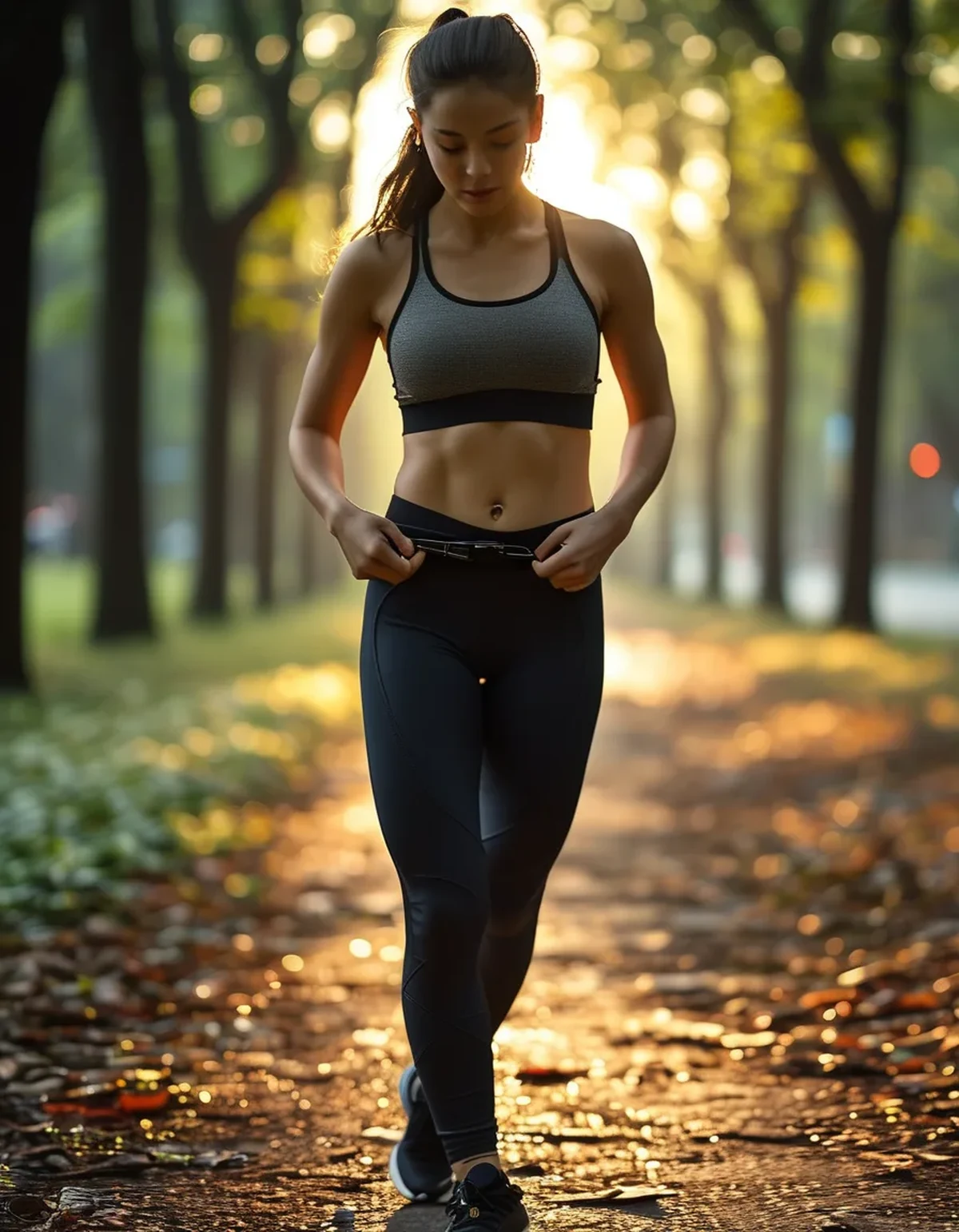
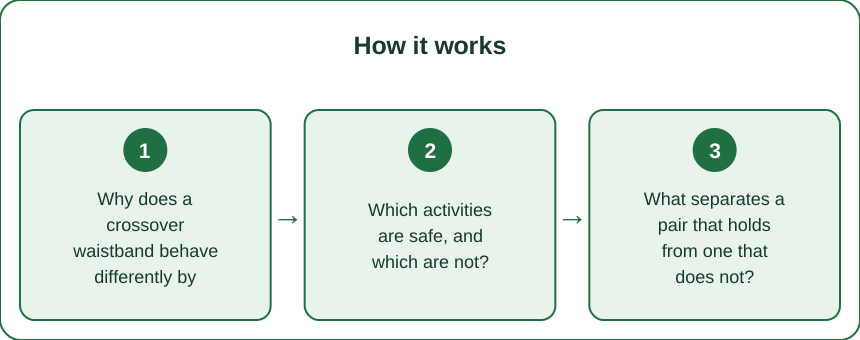
Why does a crossover waistband behave differently by activity?
The construction is asymmetric, and asymmetric structures fail asymmetrically.
A standard high-rise waistband is a continuous tube. Force applied downward anywhere on it is distributed around the whole circumference, so when it slips, it slips evenly and stays level.
A crossover waistband is two overlapping panels joined at an angle. The overlap creates a stiffer zone where the layers cross and a more flexible zone at the outer edges. Downward force does not distribute evenly - the stiff overlap resists and the flexible edges give.
In slow, controlled movement that difference is invisible. A squat loads the band once, symmetrically, and slowly. The panels move together and reseat themselves.
In repetitive impact it compounds. Every foot strike in a run sends a small downward pull through the band. The flexible edge gives fractionally more than the stiff overlap. Over hundreds of strides those fractions accumulate into a visible rotation, and once the band has rotated, the V-point no longer sits centred over your torso and the whole geometry stops working.
Continuous hip flexion adds a second mechanism. Cycling and high-knee work repeatedly fold the hip through a large range, and the crossover point sits right where the abdomen compresses and releases. That cyclical folding pushes the overlap open slightly with each repetition.
Which activities are safe, and which are not?
Sorted by how the movement loads the band.
Reliable - stable torso, controlled tempo:
- Strength training, including heavy squats and deadlifts. The band is loaded symmetrically and briefly.
- Pilates and reformer work.
- Most yoga, with the caveat that inversions are their own category - anything upside down is a different physics problem entirely.
- Walking, including long walks and incline treadmill work.
- Everyday wear, errands, travel.
Mixed - depends heavily on the specific pair:
- Barre and low-impact dance cardio. Fine in a well-constructed pair, slides in a thin one.
- Hiking, where the pack hip belt interacts with the waistband and can either help or destroy it.
- HIIT with limited jumping.
Unreliable - repetitive impact or continuous flexion:
- Running of any distance beyond a few minutes. The single most common failure case.
- Jump rope, high knees, plyometrics.
- Cycling and spin, where sustained hip flexion works the overlap open.
- Anything involving a long period bent forward.
A practical rule: if the activity involves your feet leaving the ground repeatedly, or your hip folding past 90 degrees repeatedly, assume the crossover will move and choose something else for that session.
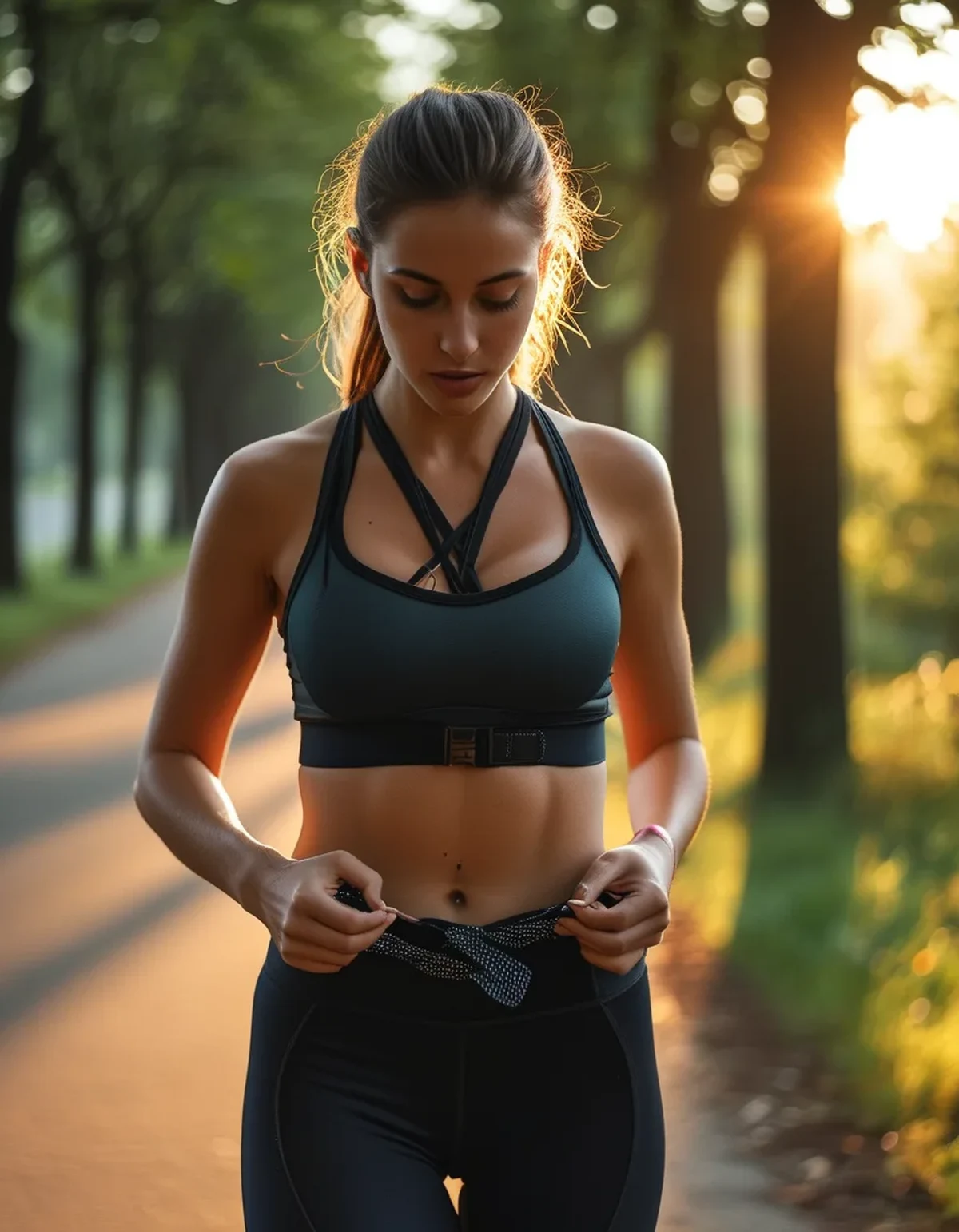
What separates a pair that holds from one that does not?
Four things, all checkable before you commit to wearing them somewhere.
Fabric weight and recovery. Heavier fabric with strong recovery - the kind that snaps back rather than staying stretched when you pull it - resists the accumulating slide. Lightweight, buttery, drapey fabric feels wonderful standing still and fails fastest under impact. Weight is the single best predictor.
Depth of the overlap. A crossover where the panels overlap by only a couple of centimetres has a small stiff zone and a lot of flexible edge. A deep overlap creates more stable structure. Look at how far the top layer extends past the crossing point.
Whether the band is one piece or seamed to the leg. A crossover cut as an extension of the leg fabric behaves differently from one seamed on as a separate component. The seamed construction, if the seam is well made, tends to be more stable because the seam itself resists stretch.
Where the V sits on your torso. If the low point of the V sits below your natural waist, the band is relying on your hips to hold it, and hips are exactly where the diameter is changing during movement. If it sits at or just above the narrowest point of your waist, gravity and anatomy are helping.
The test that predicts it: put them on, then do twenty fast, genuine high knees in the fitting room or your bedroom. Not ten polite ones. If the V is still centred and level after twenty, they will survive most things. If it has rotated even slightly, that rotation will be substantial at mile two.
5 Mistakes That Make Crossover Waistbands Slide
1. Sizing down to make them hold. A tighter pair does not hold better - it compresses more tissue above the band, creates a firmer ledge for the band to slide off, and gets uncomfortable in exactly the activity where you wanted the hold. Correct size with the right fabric weight beats a size down every time.
2. Wearing them with a long, heavy top. A heavy tunic or oversized sweatshirt sitting on the waistband adds continuous downward drag and hides the rotation until it is severe. If you cannot see the V, you cannot correct it early.
3. Running in a pair chosen for how they feel standing in a shop. Comfort while standing selects for lightweight fabric, which is exactly the property that fails under impact. The shop test and the run test select for opposite things, which is why this mistake is so common.
4. Ignoring what the sports bra band is doing. If the bra band sits low enough to touch the top of the crossover, the two garments fight each other and the crossover loses. A slightly shorter bra or a slightly higher-rise legging solves it instantly.
5. Assuming a pair that failed is faulty. Most crossover waistbands are designed and constructed for stable-torso activity. A pair failing during a run is generally doing what its construction predicts, not falling short of a promise - which means the fix is choosing a different pair for running, not returning that one.
FAQ: Crossover Waistband Questions, Answered
Are crossover leggings good for running?
Generally not, unless the fabric is heavy with strong recovery and the overlap is deep. Repetitive impact works one side of the asymmetric band down faster than the other, producing rotation. For running, a wide continuous high-rise band is more reliable.
Why does my crossover waistband twist to one side?
Because the crossed panels have a stiff overlap zone and flexible outer edges, so downward force from impact or repeated hip flexion moves one region more than the other. The accumulated difference shows up as rotation rather than an even slide.
Are crossover waistbands okay for lifting?
Yes - lifting is one of their best applications. Loading is symmetrical, brief, and with a stable torso, which is exactly what the construction handles well. Many people find the V-shape sits more comfortably under a lifting belt than a straight band.
How do I stop crossover leggings from rolling down?
Check the fit at the natural waist rather than the hip, choose heavier fabric with strong recovery, avoid a bra band that overlaps the top edge, and match the activity to the construction. If they roll during running specifically, the pair is not the problem - the pairing is.
TL;DR:
- The band is asymmetric, so it fails asymmetrically - twisting rather than sliding evenly.
- Stable-torso, controlled activity is where it works: lifting, pilates, walking, most yoga.
- Repetitive impact and continuous hip flexion break it: running, jumping, cycling.
- Fabric weight and recovery predict performance better than price or brand.
- Twenty fast high knees before you wear them out will tell you everything.
The pair you love for lifting is not lying to you. It is just built for a different set of forces than the ones a run applies.
See It in Motion
Seen here: Super High Waist Embossed Yoga Leggings with Inner Pocket — shop it on bubblelime.com
Keep Reading
This article is for general informational and styling purposes only. Fit, sizing, and product availability may vary.