How Crossover Waistbands Behave Once It Gets Humid
Quick Answer: The overlapping front panel of a crossover waistband is a double layer of fabric across the lower abdomen, which means it holds more moisture and dries slower than a flat waistband. In humidity, choose a lighter-weight knit with a higher nylon content, look for a crossover with a shorter overlap, and skip brushed or peached finishes entirely - those are the ones that stay damp.
The cut that looked so good in a cool studio in March is the same cut that feels heavy and clammy in an August class. Nothing is defective. It is just two layers of fabric where a normal waistband has one.
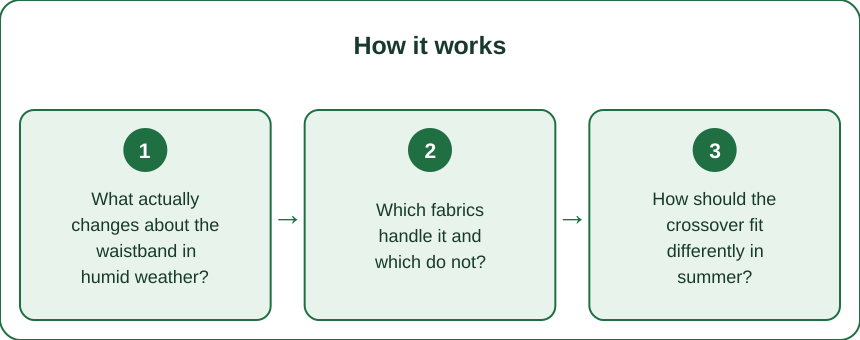
What actually changes about the waistband in humid weather?
Two things. The overlap creates a double thickness of fabric across an area that sweats moderately, so the waistband holds roughly twice the moisture it would otherwise.
And because that area sits against skin with limited airflow, evaporation is slow. In dry air it clears in minutes. Above 70 percent humidity, it may not clear at all during the session.
The result is a waistband that feels heavier as the class goes on, which is also when it becomes most likely to shift or roll.
Which fabrics handle it and which do not?
Higher nylon content - roughly 70 to 80 percent nylon with spandex - moves moisture faster and dries noticeably quicker than polyester-heavy blends of similar weight.
Lighter weight matters more than fiber, honestly. A 200 gsm knit doubled over is still lighter than a 280 gsm knit doubled over, and the difference is obvious after twenty minutes.
Avoid brushed or peached interiors in summer. That soft napped surface is exactly what makes the pair lovely in November and exactly what traps moisture in August.
Ribbed and mesh-panel versions handle humidity best, though they trade some of the smoothing effect that draws people to the style in the first place.
How should the crossover fit differently in summer?
Look for a shorter overlap. Some designs cross nearly the full front width, others only 3 to 4 inches. The shorter version keeps most of the flattering diagonal line while halving the doubled area.
Size honestly at the waist rather than sizing down for compression. A crossover panel that is already fighting for room will roll once it is damp, and a rolled crossover is far more noticeable than a rolled flat band.
And check the seam finish. Flat-locked seams under the overlap stay comfortable when wet; standard overlocked seams are the ones that leave a mark.
What Nobody Tells You About Crossover Waistbands and Sweat Marks
The doubled panel dries in a visible outline. On mid-tone colors - dusty blue, sage, mauve - you can end up with a distinct dry-versus-damp boundary right across the front for an hour after class.
Black and very dark colors hide it entirely. So do heathered or marled fabrics, because the variegated surface breaks up the boundary visually. Solid mid-tones are the worst case, which is unfortunate because they are the most popular colorways.
The third thing nobody mentions: the outline shows up more on tightly knit smooth fabrics than on textured ones. If you love a mid-tone, choose a ribbed or textured version of it.
And a small practical note - the doubled panel takes meaningfully longer to air dry at home. Hang crossover pairs waistband-down and open rather than folded over a rail, or they will still be damp the next morning.
FAQ: Crossover Waistbands in Summer, Answered
Do crossover waistbands run hotter than regular ones?
Across the lower abdomen, yes - it is a double layer of fabric. The rest of the legging is identical, so the difference is localized rather than overall.
Will the crossover roll more when it is damp?
It can, especially if the pair is slightly tight at the waist. Sizing true at the waist and choosing a shorter overlap both reduce it.
What is the best summer fabric for this style?
A lighter-weight nylon-rich knit, ideally ribbed or with a mesh panel, and definitely not brushed on the inside.
TL;DR:
- The crossover panel is a double layer of fabric, so it holds more sweat and dries slower than a flat waistband.
- Choose lighter weights and nylon-rich blends; avoid brushed or peached interiors in summer.
- A shorter overlap keeps the flattering line with half the trapped moisture.
- Mid-tone solids show a dry-versus-damp outline; dark, heathered or textured fabrics hide it.
The style is not a winter-only cut, but the summer version of it is a genuinely different garment. Pick for weight and fiber rather than for the silhouette alone and it stays comfortable through August.
See It in Motion
Seen here: Super High Waist Embossed Yoga Leggings with Inner Pocket — shop it on bubblelime.com
Keep Reading
This article is for general informational and styling purposes only. Fit, sizing, and product availability may vary.